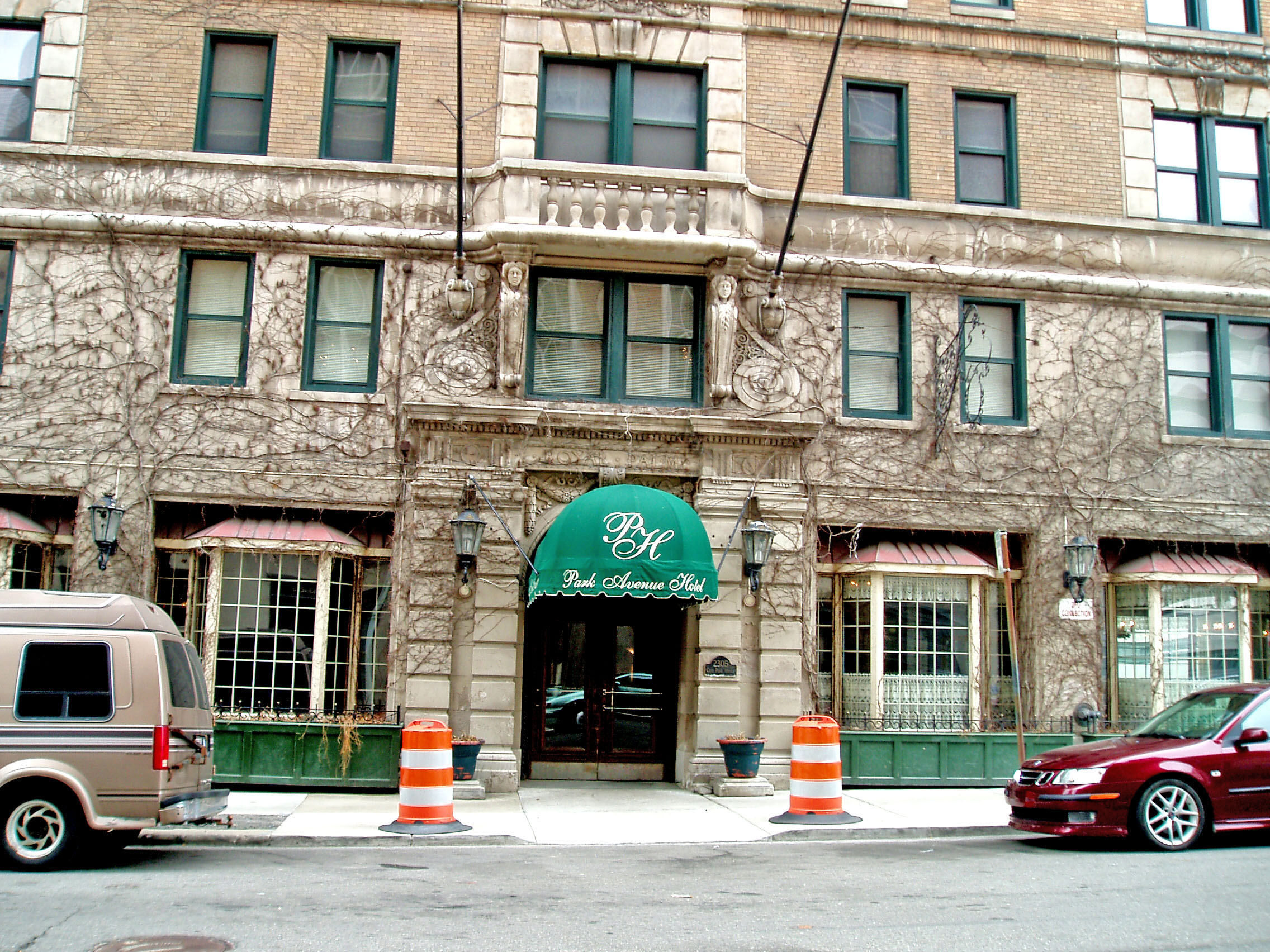
Yes, you are looking at a picture of the Royal Palm Hotel in downtown Detroit. There have been two periods in Detroit's history when many new or renovated hotels opened in downtown. One is this first decade of the 21st century with the opening of the Detroit Garden Hilton, the three new hotels associated with casinos and the refurbishing of the Book Cadillac and the Fort Shelby. The 1920s was the other decade of great hotel building. Detroit was growing into the nation's leading industrial center because of the booming vehicle industry, so large numbers of business men came to the city daily. The Book Cadillac opened at the corner of Washington Boulevard and Michigan. At that time, Law Tuller was the leading local hotel entrepreneur. He ran the Tuller Hotel on Grand Circus Park and expanded it four times in the first three decades of the last century. But that was not sufficient, so he commissioned architect Louis Kamper to design three massive new hotels, all on Park Avenue; the Eddystone at the corner of Park Avenue and Spoat, the Park Avenue Hotel at 2643 Park Avenue and the Royal Palm a couple of blocks closer to downtown that you see pictured above.
Kamper selected an Italian Renaissance design for this 13-story building. It is only one of the three Tuller Park Avenue hotels to be in operation continuously since it was built. It is now a residential rather than a transient hotel. The building also houses the Town Pump Tavern, a useful spot for libations before or after watching the Tigers, the Lions or the Red Wings. It is easy to be confused about the name for this hotel. At birth, it was called the Royal Palm Hotel and Lew Tuller's Park Avenue Hotel was about six blocks west. The former Park Avenue Hotel was used by the Salvation Army for a decade or more, but by 2009, was an abandoned structure. At some point, the owners of the Royal Palm Hotel selected a new name for their establishment: The Hotel Park Avenue.
In 1923, a group of Detroit developers created a Park Avenue Association and drew up a plan to erect upscale housing and office space along Park Avenue west from Grand Circus Park. This Park Avenue was intended to rival the New York avenue of the same name. Elegant buildings were constructed and many of them still stand including the Women's City Club Building, the Iodent Building, the Colony Club Building, the Detroit Building and the and the Kales Building and the Park Avenue Building at the corner of Park and Adams at Grand Circus Park. These structures are now included in the Park Avenue Historic District that is listed on the State of Michigan and National Historic registers.
Architect: Louis Kamper
Architectural style: Italian Renaissance
Date of construction: 1925
Website for the Town Pump Tavern: http://www.thetownpumptavern.com/Welcome.html
Website for the Park Avenue House: http://theparkavenuehouse.com/
City of Detroit Designated Historic District: Not listed
State of Michigan Registry of Historic Sites: This hotel building was included
in the Park Avenue Historic District. P2935 listed
April 18, 1996
National Register of Historic Places: This hotel was included in the Park Avenue
Historic District, listed May 13, 1997.
Photograph: Ren Farley
Description updated: September, 2009